

Availability of regional & global forecasts
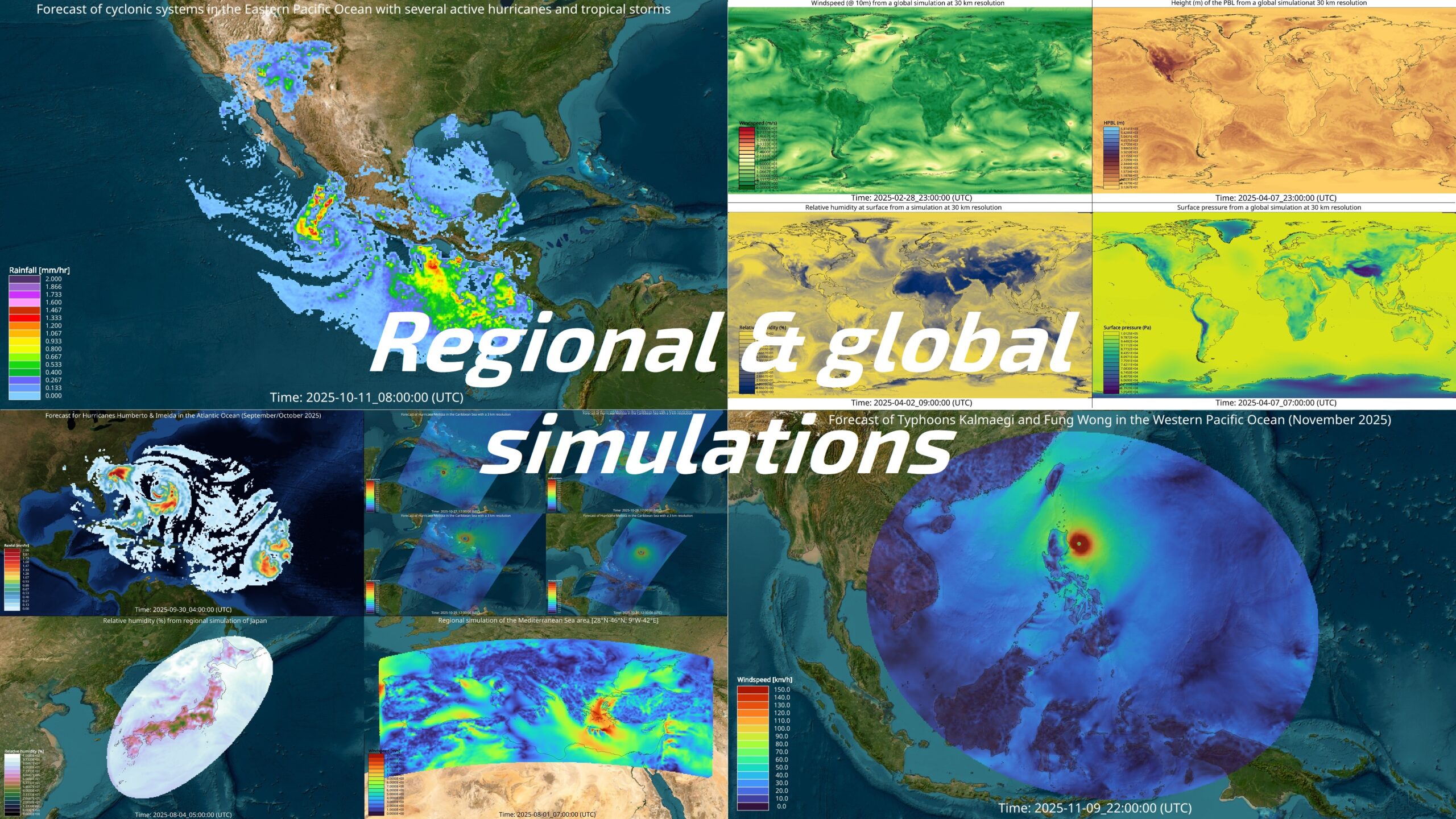
It is now feasible to perform regional and global forecasts/reanalysis using ‘GUI for Numerical Prediction in the public cloud’ available from the AWS Marketplace. Global simulations are a more natural fit to model the entire globe and avoid the generation of lateral boundary conditions. Regional simulations are an alternative and the eventual replacement to local WRF simulations as they provide greater flexibility in the definition of the target domain. Furthermore, the combination of regional and variable resolution meshes can potentially eliminate the need for nested domains. When used properly, regional meshes result in more customizable simulations at an affordable cost.
Wildfire emissions app
Our 2nd generation app to generate wildfire emissions combining satellite data with unsteady plume models is now able to use nested domains. The new features enhance accuracy when using more than one domain, and can factor long distance wildfire effects. The generated files can be read directly by either CMAQ or WRF-CMAQ. An extension to generate MPAS-CMAQ files will become available later this year with other mechanisms or formats being available in a bespoke fashion. Contact us directly if interested in a proof of concept (POC) for your project.
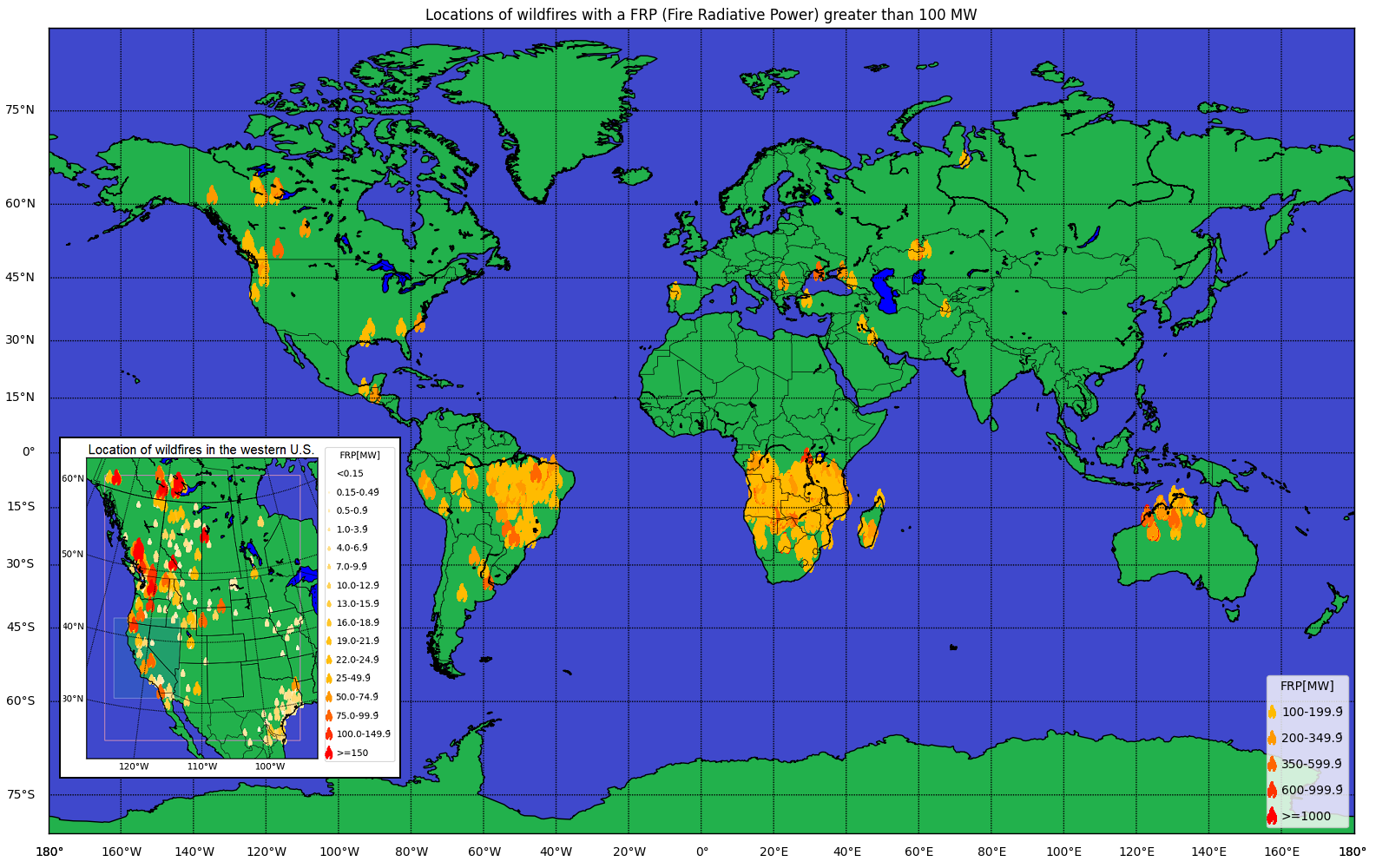
The app has the following features:
- Automatic generation of CSV files with physical & geographical data for each wildfire either across the globe or for a target domain
- Ability to select among several physical plume models
- Output species can be written using the CB6R5, CRACMM2 or other chemical mechanism
- Speciation includes over 40 species with the option to speciate particulate matter based on volatility
- Generated files can be directly read by CMAQ, WRF-CMAQ and MPAS-CMAQ (end of the year)
Arm servers in the cloud
Arm servers continue gaining ground in cloud environments: For example, it is estimated that more than 50% of the added AWS EC2 capacity in the last few years have come from Graviton instances. In addition to AWS, Google Cloud and MS Azure computational power have expanded with the introduction of Axion and Cobalt, respectively. A broader adoption of these two processors will ultimately depend on the end users’ choice. Additionally, the NVIDIA GH200 Grace Hopper chip is now available from CSPs such as Lambda or Vultr (future availability from AWS is still unclear).
Circling back to the most popular ARM processor in the cloud: AWS’s Graviton, it has been almost 2 years since Graviton4 was introduced. Although no news about Graviton5 have transpired (no surprise here), it will be interesting to hear anything about its current development and technical data or any other AWS news in the upcoming re-Invent 2025.
| Processor Name | Design Team | Date | On-premises or cloud | Cores per socket |
|---|---|---|---|---|
| AmpereOne | Ampere Computing | 2024 | Both | 96-192 |
| AmpereOne.M | Ampere Computing | 2025 | Both | 96-192 |
| AmpereOne.MX | Ampere Computing | 2026 (?) | Up to 256 | |
| AmpereOne Aurora | Ampere Computing | Up to 512 | ||
| Axion | 2024 | 72 | ||
| Azure Cobalt 100 | Microsoft | 2025 | Azure | 128 |
| Graviton3 | Anapurna Labs | 2022 | AWS | 64 |
| Graviton4 | Anapurna Labs | 2024 | AWS | 96 |
| Graviton5 (?) | Anapurna Labs | 2026 (?) | AWS | |
| NVIDIA GH200 | Nvidia | 2025 | Both | 72 |